
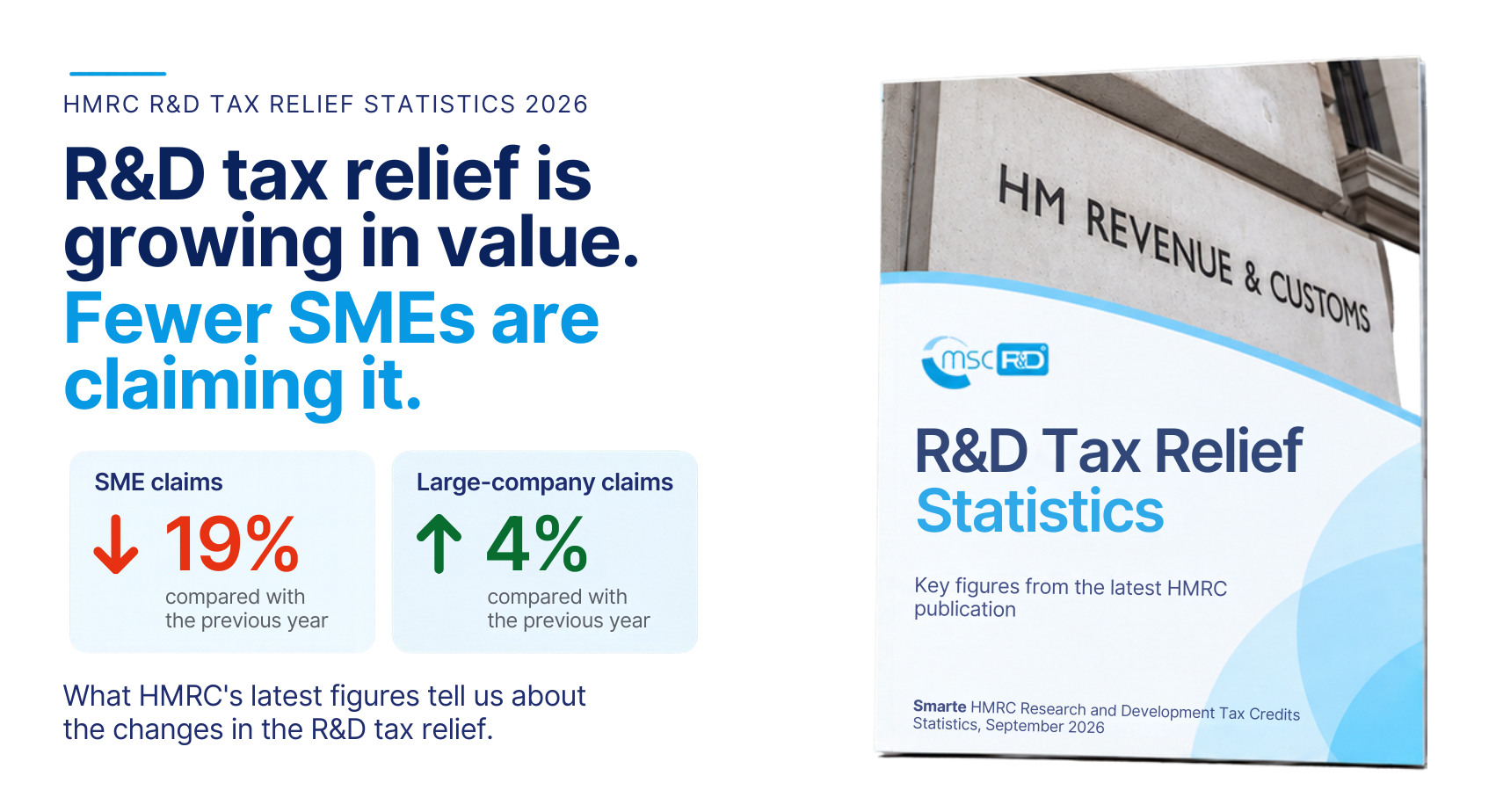
HMRC has published its latest R&D tax relief statistics, providing the first provisional picture of claims for 2024-25.
Total R&D tax relief support increased to an estimated £8.2 billion, 5% higher than the previous year, while qualifying R&D expenditure rose to £51 billion.
However, the headline figures mask a noticeable difference between SME and large-company activity.
Fewer SME claims, while large-company claims increased
The estimated number of claims fell by 17% to 40,325. SME claims fell by 19%, while large-company claims rose by 4%.
The difference is also visible in qualifying R&D expenditure. Expenditure attributed to large companies rose 14% to £30.2 billion, while SME expenditure fell 3% to £20.7 billion.
Relief is becoming more concentrated in larger claims
The average claim value increased by 27%. Claims of £500,000 and above represented just 6% of all claims, but accounted for 69% of total R&D tax relief.
The figures therefore show a smaller claimant population alongside higher overall support and a greater concentration of value in larger claims.
SME participation has continued to fall, while larger companies account for a growing share of qualifying expenditure and relief.
A changing R&D tax relief landscape
The statistics arrive during a period of significant change to the R&D tax relief schemes. 2024-25 is the first HMRC statistics release to include Merged RDEC and ERIS, meaning some scheme-level comparisons with earlier years are not directly like-for-like.
Recent changes to the scheme, alongside additional administrative requirements, also mean businesses need to pay closer attention to how, when and under which scheme a claim is made.
Our review of the latest HMRC statistics
We have looked beyond the headline figures at SME participation, large-company concentration, qualifying R&D expenditure and some of the factors the published statistics do not show.
Read the full report